
The OKX J-Curve Strategy: A High-Risk, High-Reward Trading System (Deep Breakdown)
In the world of crypto futures and perpetual contracts, few strategies capture the essence of both danger and opportunity like the J-Curve Strategy. Used by professional traders on OKX, this method is built around controlled risk exposure, dynamic scaling, and compounding on volatility. It’s not for the faint of heart — but when mastered, it can generate exponential gains.
Let’s dive deeply into what the J-Curve Strategy really means, how it works, and how traders apply it on OKX for maximum reward.
🔹 1. What Is the J-Curve Strategy?
The term “J-Curve” refers to a visual representation of performance that starts with a dip (drawdown) before shooting up in a sharp exponential recovery — forming a curve shaped like the letter “J.”
In trading, it’s a risk-managed accumulation strategy where you intentionally tolerate early drawdowns while positioning for a large asymmetric upside move. On OKX, this typically involves:
- Gradual entry scaling into a losing position (smart DCA, not reckless martingale),
- Using tight margin control and strategic leverage tiers, and
- Waiting for trend reversals or volatility spikes to amplify profits.
Essentially, traders using the J-Curve system accept early pain for later exponential gain.
🔹 2. Core Philosophy Behind the Strategy
At its core, the J-Curve Strategy is psychological and mathematical:
- Psychological: Most traders panic during drawdowns and cut losses too soon. The J-Curve trader embraces controlled drawdowns as part of the setup.
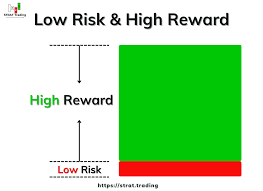
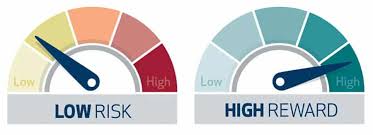
- Mathematical: The system relies on asymmetry — risking 1 to make 5, 10, or more — through compounding and pyramiding when the trend shifts.
The philosophy:
“You can’t capture exponential growth without first enduring exponential pressure.”
🔹 3. How the Strategy Works on OKX
Let’s go step-by-step.
Step 1: Identify a Reversal Zone
Using tools like Fibonacci retracements, volume profile, and funding rate imbalances, traders spot an overextended trend.
For instance:
- BTC/USDT futures are down 20% in 3 days,
- Funding rate is deeply negative (-0.05%+),
- RSI < 25, showing panic selling.
This marks a potential J-Curve entry zone.
Step 2: Build the “J” Base (Controlled Accumulation)
Instead of jumping in with full leverage, traders scale into the trade in small increments:
- 25% size at first signal,
- 25% more if price falls 2–3% deeper,
- Final 50% only when reversal structure (higher low or volume spike) appears.
Each layer adds to the “bottom curve” of the J — the controlled loss phase.
Step 3: Manage Leverage Intelligently
OKX allows cross and isolated margin modes, giving flexibility.
Pro J-Curve traders prefer:
- Isolated leverage on each leg (to prevent total liquidation),
- Gradually reducing leverage as position size grows, maintaining total risk <2–3% of account equity.
The system’s secret is not to blow up before the curve reverses upward.
Step 4: Ride the Exponential Rebound
Once the trend flips, traders compound into winning positions — the opposite of averaging down.
This “pyramiding” accelerates returns, forming the steep upward slope of the J-curve.
For example:
- Add 2x position size each time price confirms a higher low.
- Trail stop-loss behind each structure break.
- Let profits ride until funding rates normalize or exhaustion signals appear.
🔹 4. Why It’s Called a “High-Risk, High-Reward” System
The J-Curve Strategy is not for beginners. Here’s why:
Risks:
- Early entries can suffer large unrealized drawdowns.
- Over-leveraging or emotional scaling can trigger liquidation before the reversal.
- Requires high conviction and capital discipline.
Rewards:
- If executed with precision, the payoff is enormous — exponential profit curves.
- Capital efficiency is high; one strong J-Curve win can offset multiple small losses.
- It thrives in volatile OKX markets — Bitcoin, Solana, and high-beta altcoins.
In short, it’s a sniper’s strategy, not a shotgun approach.
🔹 5. Tools and Indicators to Master the J-Curve on OKX
To execute the J-Curve Strategy properly, traders combine both quantitative and sentiment tools:
| Purpose | OKX Feature / Tool | Example Usage |
|---|---|---|
| Identify exhaustion | Open Interest (OI) | OI drops during final capitulation → accumulation zone |
| Gauge sentiment | Funding Rate Dashboard | Extreme positive/negative funding = reversal alert |
| Confirm reversals | 8-Hour Candles + Volume Profile | Identify accumulation structure |
| Manage entries | Laddered Limit Orders | DCA safely without slippage |
| Protect downside | Conditional Stop-Loss | Automate liquidation protection |
These make OKX an ideal platform for such structured risk-heavy strategies.
🔹 6. Practical Example
Pair: ETH/USDT Perpetual
Initial Trend: -18% drop in 48 hours
Funding Rate: -0.08% (oversold sentiment)
Strategy Execution:
- Buy 25% at $2,650 → add 25% at $2,580 → add 50% after higher low at $2,640.
- Total risk capped at 3% of equity.
- Price rebounds to $3,200 over 3 days.
- Add pyramid positions on breakout → compound 3x initial risk.
- Exit at $3,450 → 12R profit.
This is a textbook J-Curve play: pain → patience → profit.
🔹 7. Key Mindset and Risk Rules
To survive the J-Curve system, traders must:
- Never over-leverage early — the drawdown phase is where most fail.
- Predefine max loss per trade before entry.
- Avoid emotional averaging — scale mechanically, not impulsively.
- Accept that most J-Curve setups fail small before one wins big.
The system rewards discipline, asymmetry, and delayed gratification.
🔹 8. Final Thoughts
The OKX J-Curve Strategy represents one of the most advanced and dangerous trading systems in crypto — but also one of the most rewarding when mastered.
It’s a blend of technical precision, psychological endurance, and risk-controlled aggression.
If used correctly, it can turn volatility into a compounding weapon — growing accounts exponentially over time.
But remember:
The J-Curve rewards patience, not recklessness. You can’t shortcut through the curve — you have to survive it first.