
The Greek Letters of Crypto Options: A Simple Breakdown for OKX Traders
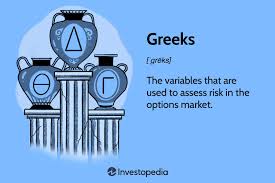
When trading crypto options on OKX, one of the most powerful tools at your disposal is understanding the Greek letters — commonly known as “the Greeks.” These metrics measure how sensitive an option’s price is to various factors like volatility, time, and the underlying asset’s movement. While they might seem complex at first, grasping their meaning helps you manage risk, plan strategies, and understand price behavior like a professional trader.
Let’s break down each Greek in simple but deep and practical terms, tailored for OKX options traders.
1. Delta (Δ): Sensitivity to Price Movement
Definition:
Delta measures how much an option’s price will change when the price of the underlying crypto (like BTC or ETH) changes by $1.
- Call Options (Buy Side): Delta ranges from 0 to +1
- Put Options (Sell Side): Delta ranges from 0 to -1
Example on OKX:
If you’re holding a BTC call option with a delta of 0.6, and BTC’s price rises by $100, your option’s value will increase by roughly $60.
How Traders Use It:
- Directional Bias: Delta shows how “long” or “short” you are in the market.
- A delta of +1 means you’re fully exposed as if holding 1 BTC.
- A delta of 0.5 means half exposure.
- Hedging: Many OKX traders use delta to create delta-neutral strategies, meaning their overall portfolio remains unaffected by small BTC price moves.
Pro Tip:
Delta also indicates the probability that the option will expire in the money (ITM). For instance, a delta of 0.7 implies a 70% chance your call finishes ITM.
2. Gamma (Γ): Sensitivity of Delta
Definition:
Gamma measures how fast delta changes when the underlying crypto’s price moves.
If delta tells you where your exposure is, gamma tells you how quickly that exposure will shift.
Example:
Suppose you hold a BTC call with a delta of 0.6 and a gamma of 0.05.
If BTC increases by $100, your delta becomes 0.65, meaning your exposure grows as the trend strengthens.
Why Gamma Matters:
- High gamma means delta changes rapidly — typical near-the-money options or when expiration is close.
- Low gamma means delta changes slowly — typical for deep in/out-of-the-money options.
Practical Tip for OKX Traders:
When BTC becomes volatile, gamma risk rises. This means your hedges might need constant rebalancing because delta keeps shifting. Professional market makers on OKX manage gamma carefully to avoid getting caught in fast-moving markets.
3. Theta (Θ): Sensitivity to Time Decay
Definition:
Theta measures how much value an option loses as time passes — also known as time decay.
Every day that passes, an option’s extrinsic value shrinks, especially if the market stays flat.
Example:
If your ETH call has a theta of -0.02, it means you lose $2 per day from time decay if other factors remain unchanged.
Why It Matters:
- Buyers: Theta works against you. The longer the market stays quiet, the more your option’s value melts.
- Sellers: Theta works for you. You profit as time decay eats away at the buyer’s premium.
Pro Tip:
Theta accelerates as expiry nears and is highest for at-the-money options. On OKX, short-term weekly options can lose value quickly if price doesn’t move, making them great for income strategies like covered calls or short straddles — but also riskier.
4. Vega (ν): Sensitivity to Volatility
Definition:
Vega measures how much an option’s price changes for every 1% change in implied volatility (IV) — the market’s forecast of future price swings.
Example:
If a BTC call option has a vega of 0.10, and IV rises by 5%, the option’s price increases by $0.50.
Why It Matters on OKX:
- When volatility spikes (for example, before big announcements or market news), both calls and puts gain value due to higher uncertainty.
- When volatility drops after events, options lose value quickly — a common trap for new traders.
Vega Traders’ Strategy:
Professional traders on OKX often trade volatility instead of direction, using strategies like:
- Straddles – Buying both call and put to profit from large moves.
- Strangles – Similar but with different strike prices.
- Iron Condors – Selling volatility in range-bound markets.
5. Rho (ρ): Sensitivity to Interest Rates
Definition:
Rho measures how much an option’s price changes for a 1% change in interest rates.
In traditional markets, Rho is crucial. But in crypto, it’s less significant since:
- There’s no fixed “risk-free rate” like government bonds.
- Funding rates and borrowing costs fluctuate across exchanges.
Still, if crypto lending rates rise, call options become slightly more valuable (and puts slightly less valuable). OKX institutional traders sometimes account for Rho when doing cross-exchange arbitrage involving futures, options, and margin trading.
How the Greeks Work Together
Think of the Greeks as a dashboard for your options position:
- Delta = your directional risk
- Gamma = how fast that risk changes
- Theta = how time erodes your value
- Vega = how volatility boosts or hurts you
- Rho = the small impact from interest rates
A professional OKX trader constantly monitors these to understand total risk exposure.
For example:
- A trader long calls near expiry must manage both fast theta decay and high gamma swings.
- A volatility trader focuses on vega exposure, using spreads to stay delta-neutral.
Putting It All Together on OKX
When you open the OKX Options Chain, you’ll see Greeks displayed for each contract. Here’s how to use them effectively:
- Scan Delta → to understand how directional each position is.
- Check Theta → if you’re holding for multiple days, anticipate time decay.
- Watch Vega → before big events or volatility spikes.
- Monitor Gamma → especially near expiration, to control large delta shifts.
You can combine these insights to craft advanced strategies:
- Delta-neutral + Vega-positive → to profit from volatility expansion.
- Theta-positive + Vega-negative → to earn from time decay when expecting calm markets.
Final Thoughts: The Greeks Are Your Risk Compass
Understanding the Greeks turns you from a speculator into a strategic trader.
On OKX, where markets move fast and leverage magnifies everything, knowing how each Greek behaves helps you:
- Predict how your positions will react to BTC/ETH swings
- Build stable, hedged portfolios
- Avoid emotional, short-term decisions
The Greeks are not just theory — they are your real-time risk signals.
Master them, and you’ll trade options on OKX with precision, confidence, and control.