
Why Liquidation Price Matters More Than Anything Else:
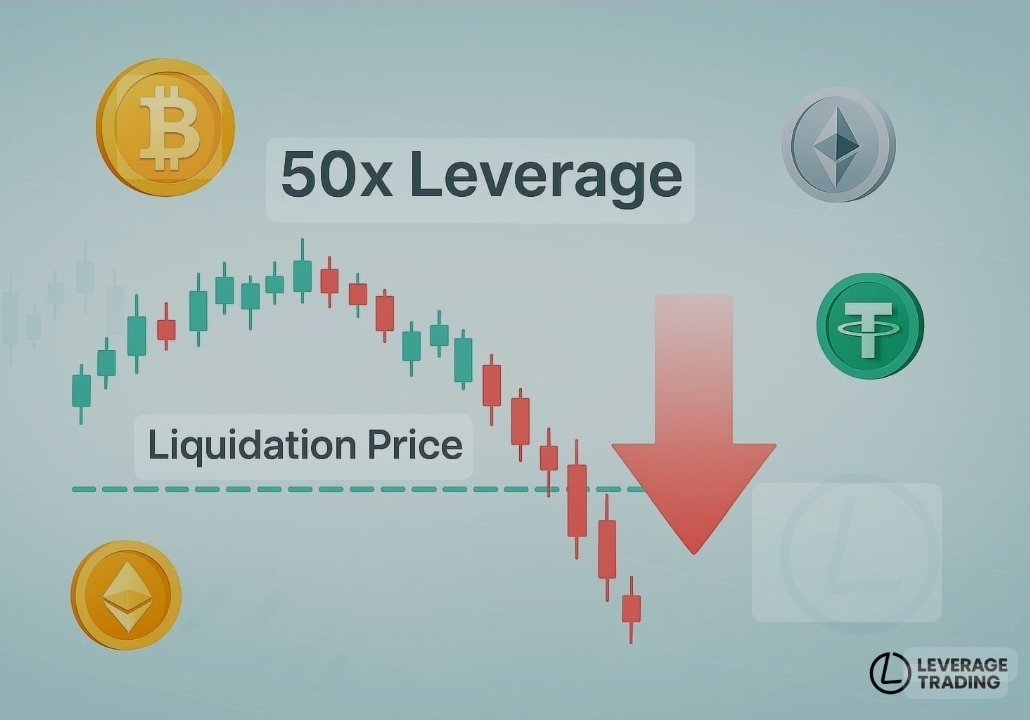
In leveraged trading, your liquidation price is the point of no return. It represents the price level at which your position will be automatically closed by the exchange to prevent further losses. Reaching your liquidation price means you lose your entire margin allocated to that position. While other metrics like profit/loss, funding rates, and volume are important, they all become irrelevant if you get liquidated.
Here's a breakdown of why it's so crucial:
• Zero-Sum Game (for you): Liquidation represents a total loss of your allocated capital. It's the worst-case scenario, and your primary goal as a trader should be to avoid it.
• Control Over Your Risk: Knowing your liquidation price allows you to precisely control the maximum amount you can lose on a trade. By carefully managing your position size, leverage, and entry price, you can set a liquidation price that aligns with your risk tolerance.
• Avoiding Emotional Decisions: When you're aware of your liquidation price, you're less likely to make impulsive decisions based on fear or greed. You have a clear objective marker that guides your actions.
• Better Risk-Reward Assessment: Knowing your liquidation price allows you to calculate the potential risk-reward ratio of a trade more accurately. You can determine whether the potential profit justifies the risk of being liquidated.
• Essential for All Levels of Traders: Whether you're a beginner or an experienced trader, understanding and managing your liquidation price is fundamental to responsible leveraged trading.
Factors Affecting Your Liquidation Price:
Several factors influence your liquidation price:
• Entry Price: Your entry price is the starting point. The further the market moves against you from your entry price, the closer you get to liquidation.
• Leverage: Higher leverage magnifies both gains and losses. It also brings your liquidation price closer to your entry price. The higher the leverage, the smaller the price movement needed to trigger liquidation.
• Margin Mode (Isolated vs. Cross):
• Isolated Margin: The liquidation price is based on the margin specifically allocated to that position. If the price reaches that level, only the margin allocated to that isolated position is lost.
• Cross Margin: The liquidation price is based on the total available balance in your account (or the specific margin account). This provides more buffer against liquidation, but it also means that a single bad trade can wipe out your entire account balance.
• Maintenance Margin Ratio: Exchanges require you to maintain a certain percentage of the value of your position as margin. This is called the maintenance margin ratio. As your position loses value, your margin balance decreases, and if it falls below the maintenance margin requirement, you'll be liquidated. The maintenance margin requirement varies depending on the asset, the leverage, and the exchange.
• Funding Rates (Perpetual Swaps): In perpetual swaps, you pay or receive funding fees based on the difference between the price of the perpetual swap and the spot price of the underlying asset. If you are paying funding fees, this reduces your margin balance and moves your liquidation price closer to the current market price. Conversely, receiving funding fees increases your margin balance and moves your liquidation price further away.
• Mark Price vs. Last Price: Exchanges typically use the mark price (a smoothed average of prices from multiple exchanges) to determine liquidation, rather than the last traded price on their own platform. This is to prevent manipulation. A sudden spike or flash crash on OKX may not trigger your liquidation if the mark price d
oesn't reach your liquidation price.
Calculating Your Liquidation Price (Simplified):
The precise formula for calculating liquidation price can be complex and may vary slightly depending on the exchange. However, here's a simplified example for a long position:
Liquidation Price ≈ Entry Price - (Margin Balance / (Position Size * Contract Size))
Where:
• Entry Price = The price at which you opened the position.
• Margin Balance = The amount of margin you have allocated to the position.
• Position Size = The quantity of contracts you are holding.
• Contract Size = The amount of the underlying asset represented by one contract (e.g., 1 BTC).
Important: OKX provides the liquidation price directly on their trading interface. Always rely on the liquidation price displayed by OKX, rather than trying to calculate it manually.
How to Use Liquidation Price for Risk Management:
1. Determine Your Risk Tolerance: How much of your capital are you willing to risk on a single trade?
2. Set a Maximum Acceptable Liquidation Price: Based on your risk tolerance, determine the maximum price level at which you're willing to be liquidated.
3. Calculate Your Position Size and Leverage: Use the OKX trading interface to experiment with different position sizes and leverage levels. Observe how the liquidation price changes as you adjust these parameters.
4. Choose a Position Size and Leverage That Keeps Your Liquidation Price Within Your Acceptable Range: This ensures that you're not risking more than you're comfortable with.
5. Use Stop-Loss Orders: Although your liquidation price is your ultimate safety net, you should always use stop-loss orders to exit a losing trade before it reaches liquidation. This helps preserve more of your capital. A stop-loss order allows you to define an acceptable loss before the price drops down to the liquidation price.
Example:
You have $1,000 in your OKX account, and you're willing to risk a maximum of $100 on a single trade. You want to open a long position on BTC/USD.
1. You decide that you're willing to risk a maximum of 10% of your account balance ($100).
2. You use the OKX trading interface to experiment with different position sizes and leverage levels.
3. You find that if you use 10x leverage and open a position size of 0.01 BTC, your liquidation price will be approximately $1,000 below your entry price. This means you'll lose your entire $100 margin if the price drops by $1,000.
4. You decide that this is acceptable, so you open the position.
5. You set a stop-loss order at a price level that is closer to your entry price (e.g., $500 below your entry price). This will exit the trade before it reaches liquidation, preserving more of your capital.
Bybit and Binance Applicability: The concept is the same for Bybit and Binance. Locate your liquidation price, understand the factors that move it, and trade according to a strong risk management plan.
In Conclusion:
While other metrics are important, the liquidation price is the most crucial metric to understand and manage when trading leveraged products on OKX. By carefully controlling your position size, leverage, and entry price, you can set a liquidation price that aligns with your risk tolerance and protects your capital. Always prioritize risk management and use stop-loss orders to exit losing trades before they reach liquidation. Failure to understand and manage your liquidation price is a recipe for disaster in leveraged trading.